-

- Find a Property
-
Sell
iconSell Your Property
- Agents
-
Explore
iconExplore
-
Blog & More
iconMarket Insights


May 19, 2025
3 Min Read
The Surprising and Unexpected Frick Madison
By Bart Boehlert
Header Image: Fragonard’s The Progress of Love series at the Frick Madison, courtesy of the Frick Collection, photos by Joe Coscia
A favorite past time of New Yorkers has long been spending an afternoon in the Gilded splendor of the Frick Collection located in the former mansion home of Henry Clay Frick, on Fifth Avenue at East 70th Street. There, visitors enjoy viewing Old Master paintings in a lavish domestic setting complete with the sumptuous eighteenth century furniture, carpets, decorative arts and objects that Mr. Frick collected. That mansion is now closed and undergoing a two year-long renovation and 30% expansion designed by the firm Selldorf Architects. In a stunning quick change, the refined masterpieces of the Frick Collection have moved five blocks north into the former Whitney Museum at Madison Avenue and East 75th Street, and found themselves temporarily housed in a modern, Brutalist Bauhuas building designed by Marcel Breuer of rugged concrete. “Frick Madison offers the rare opportunity to view our collections in completely new light and in fresh juxtapositions,” said Ian Wardropper, the Anna-Marie and Stephen Kellen Director of the Frick Collection at the press preview.
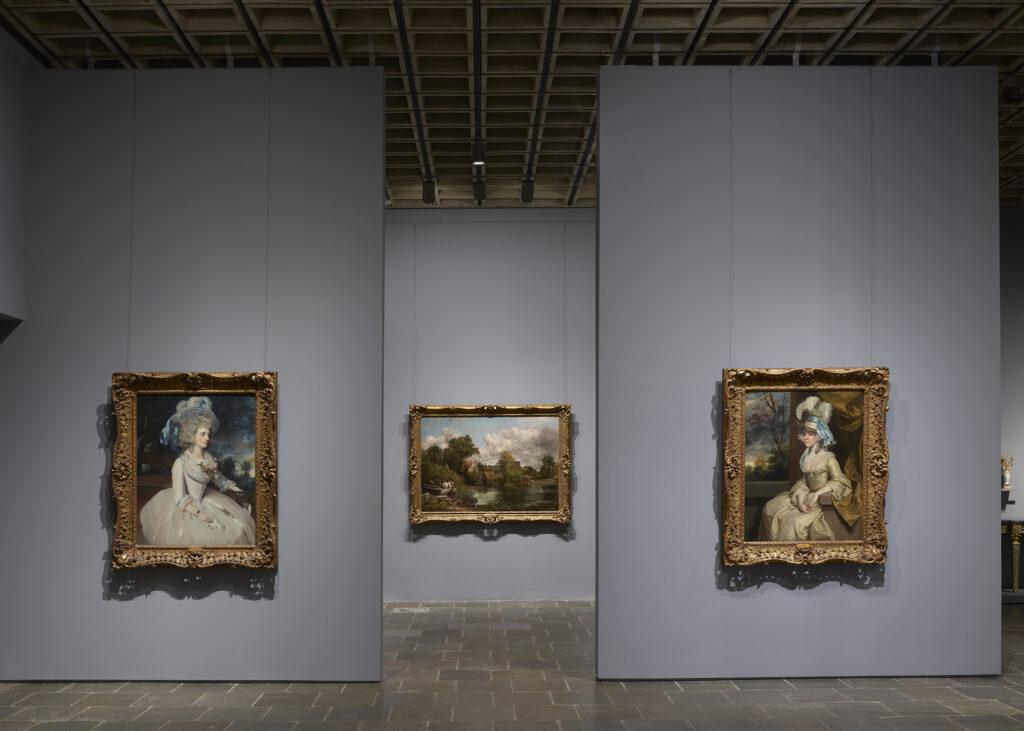
Now displayed within the cubic building are paintings, sculptures, bronzes, clocks and rugs in a minimal, spartan setting. The sharp edges of grey walls contrast with the richness of the artworks, and, as at the Frick, there are no textual wall labels so visitors download an app for information about each piece. This inventive installation was organized by the Frick’s curatorial team led by Xavier F. Salomon, Deputy Director and Peter Jay Sharp Chief Curator, with Curator Aimee Ng, Assistant Curator for Sculpture Giulio Dalvit, and former Curator of Decorative Arts Charlotte Vignon, along with the Frick’s exhibition designer Stephen Saitas and Selldorf Architects.
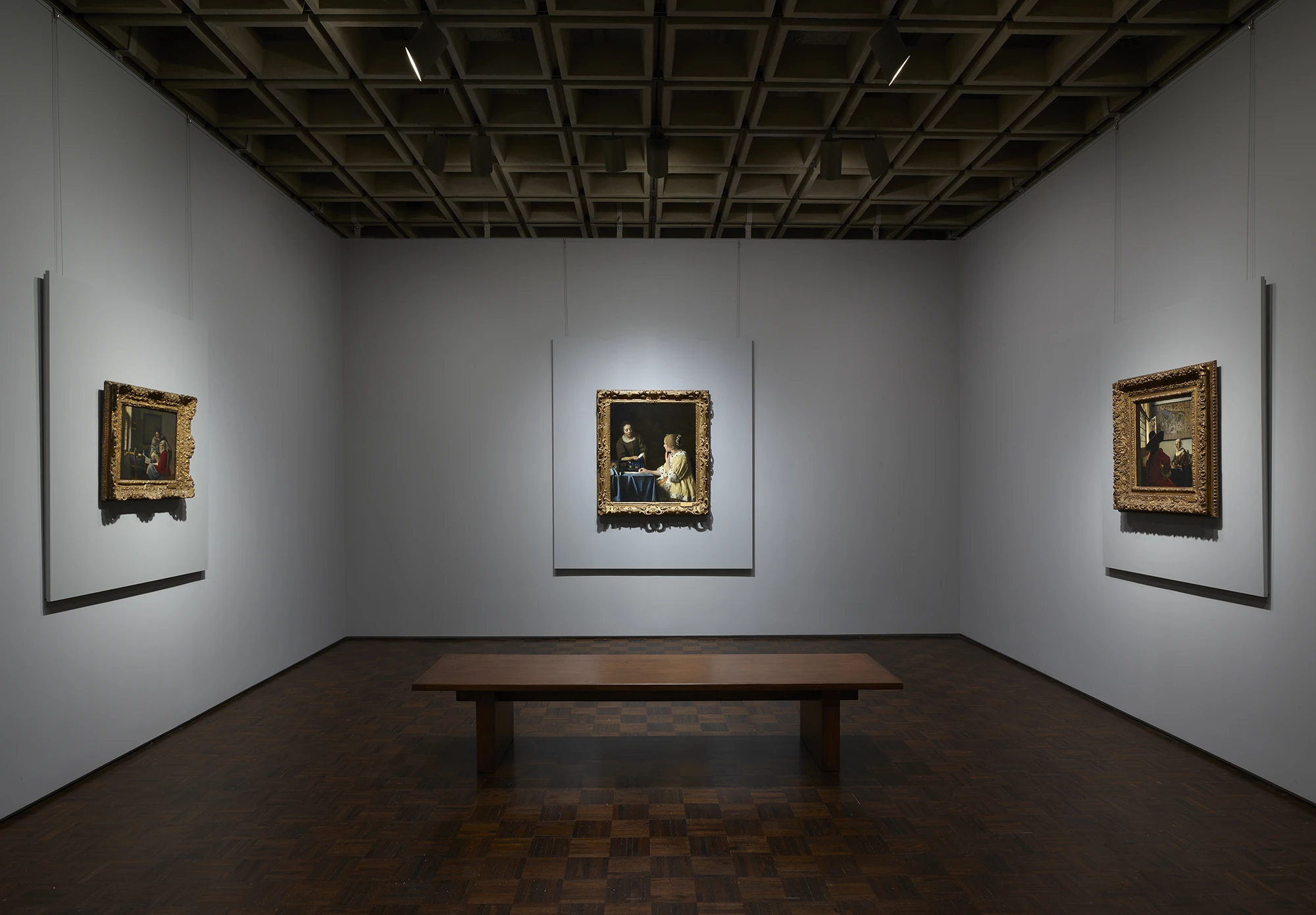
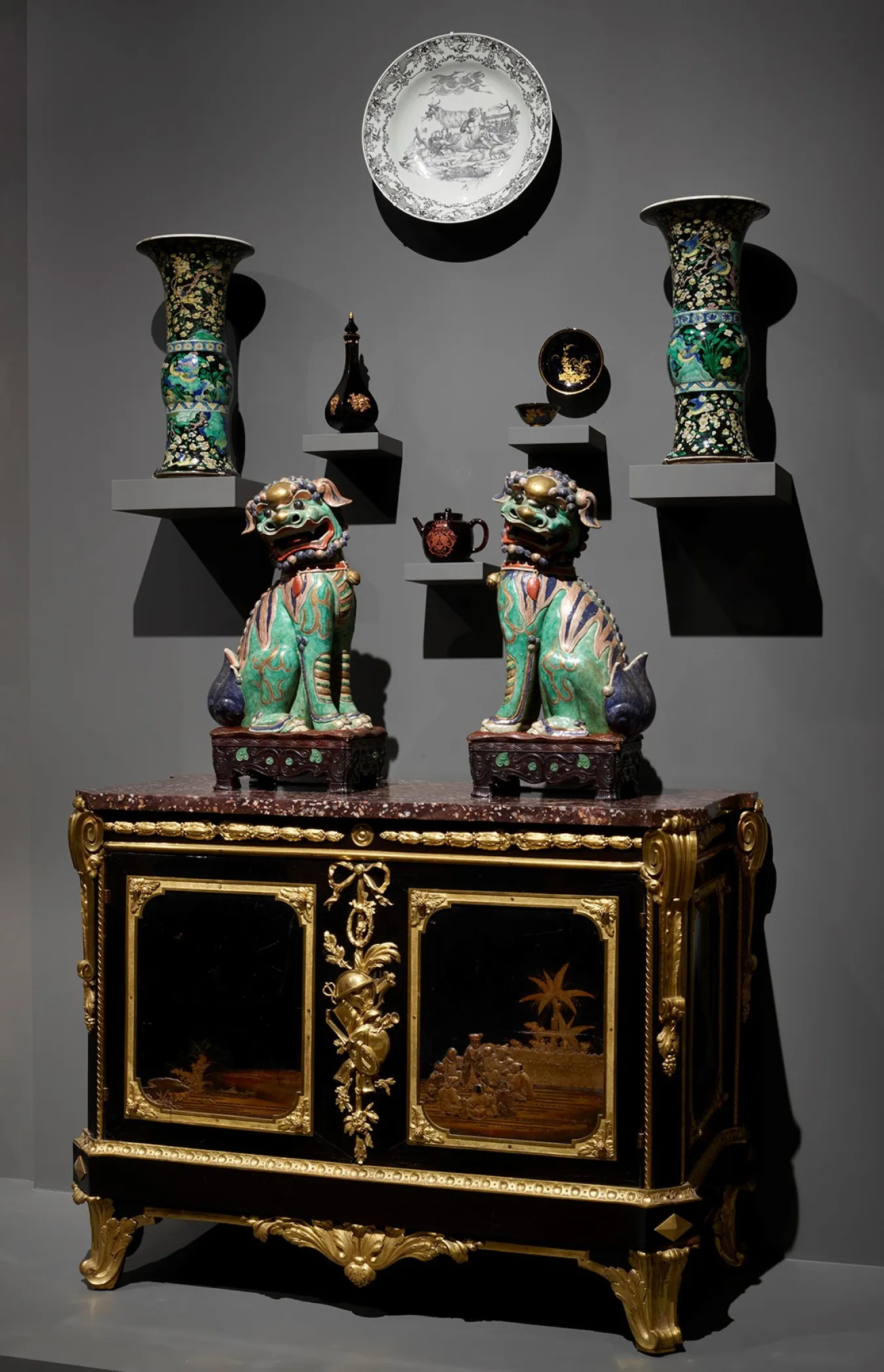
The collection is organized geographically, and Northern European painting is displayed on the second floor. A rare treat is a small room where three luminous Vermeers depicting quiet domestic life are hung on three facing walls, seemingly reflecting each other. One floor above, Italian and Spanish paintings are presented. This floor also includes a porcelain room, its grey walls covered chock-a-block with ornately decorated porcelains from different eras. Striking black Chinese porcelain vases decorated with colorful florals stand on one wall, while another features pretty pink and white porcelains that are a mix of German, Austrian and Chinese in origin.
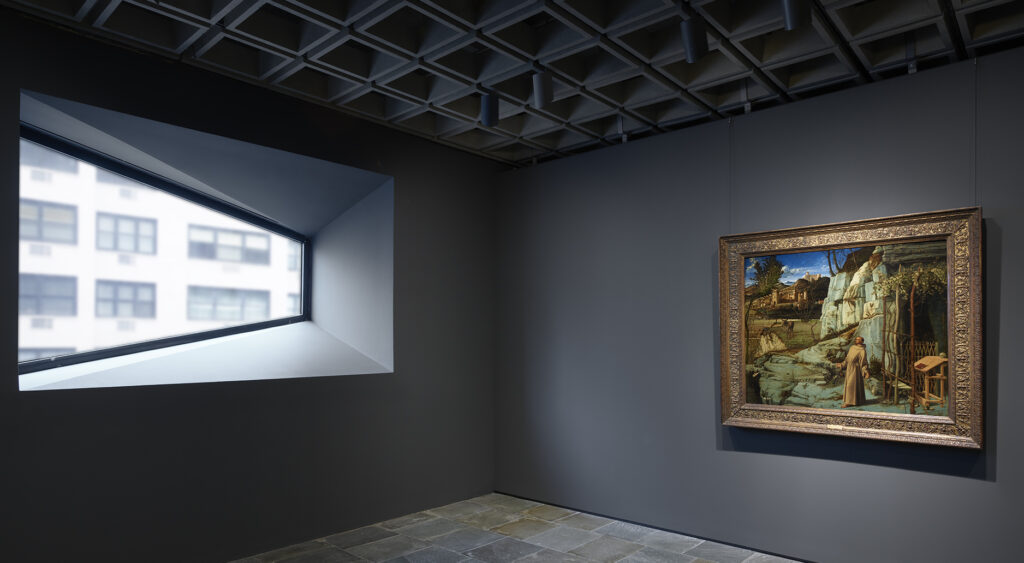
On the fourth floor are the French and English masters including the Impressionists, which are the most modern works in the Frick Collection. Shown for the first time all together are the fourteen paintings which make up The Progress of Love series by Fragonard, four of which were commissioned by Madame du Barry, the last mistress of King Louis XV. In a striking contrast, some of these frothily rosy pictures are hung next to a stark, modern, trapezoidal Breuer window that reveals the brick buildings of Madison Avenue across the street.
Frick Madison is the result of two great American art benefactors. Heiress and sculptor Gertrude Vanderbilt Whitney (1875-1942) established the Whitney Museum of American Art, https://whitney.org in 1930 with a mission to collect and display the work of living American artists. The museum commissioned Hungarian-born Bauhaus architect Marcel Breuer to design its modern building in 1966, which housed the Whitney until 2015 when it moved to a spacious new Renzo Piana design in the Meatpacking District. After that the building was briefly the site of a branch of the Metropolitan Museum of Art called Met Breuer.
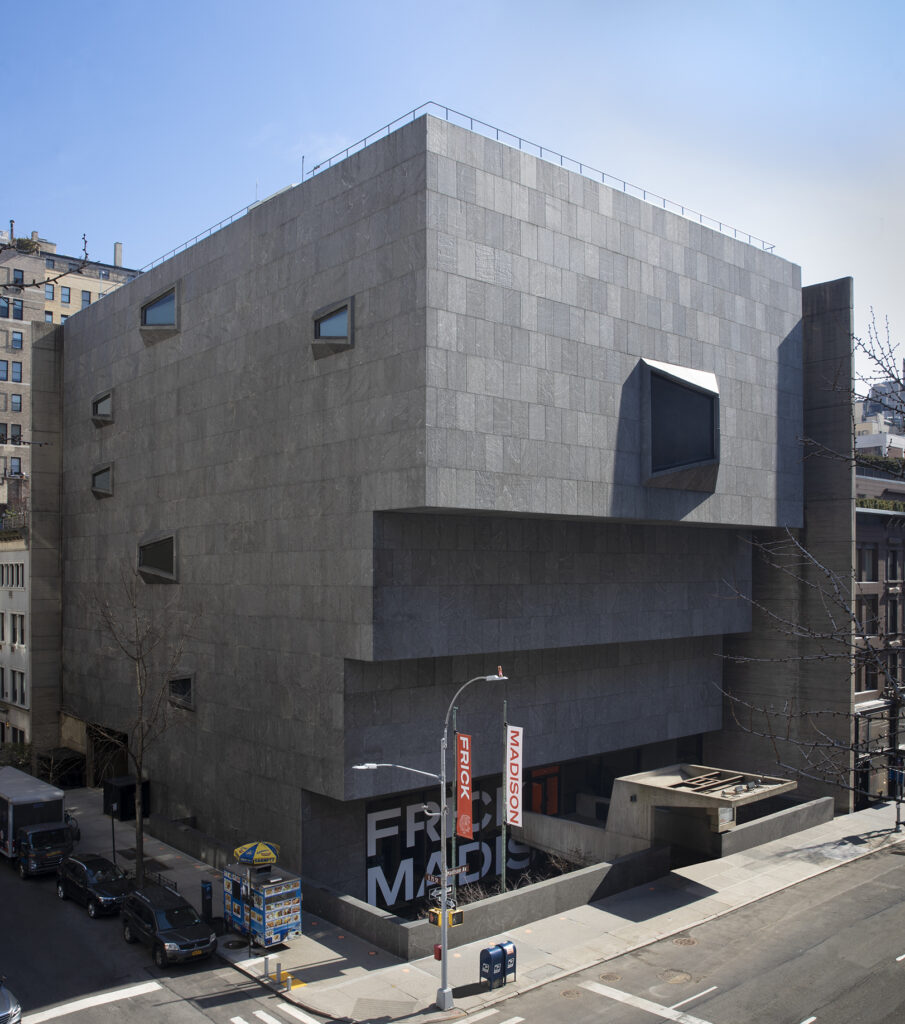
Its subsequent vacancy now provides a temporary home for the collection of Henry Clay Frick (1849 – 1919), the Pennsylvania-born industrialist who assembled one of the great private art collections at the turn of the last century. In 1914, Frick built a Beaux Arts Fifth Avenue mansion designed by the firm Carrère and Hastings as a home for his family and his growing art collection. He decreed that upon his death, it would be open to the public. As that building now undergoes renovation, Frick Madison offers the best of New York, marrying the old and the new.
May 19, 2025
3 Min Read
Search Blog